Roomba replacement parts: genuine vs third-party and what changes
Choosing between genuine and third-party Roomba replacement parts depends on the part category, the specific Roomba model or series, and the manufacturing consistency of the supplier. Outcomes often vary by component type: filters, brushes, rollers, and batteries each have different tolerances and lifespans. Materials and fit differ between iRobot OEM parts and off-brand alternatives, so the right choice depends on priorities: warranty support, immediate cost savings, or long-term performance.
Fit and tolerance, cleaning results, reliability, and manufacturer support are the stable criteria for comparing genuine and third-party replacements. These criteria keep the evaluation grounded rather than relying on marketing claims. The Roomba replacement parts hub provides a broader overview of compatible options. Choosing a part source is separate from verifying compatibility or inspecting quality—those checks are addressed in later sections.
What “genuine” and “third-party” mean for Roomba replacement parts
Genuine Roomba replacement parts are manufactured by iRobot and sold through its official channels. Third-party replacement parts come from other manufacturers and are designed to fit Roomba vacuums. This distinction is about the source of the part, not the type of part.
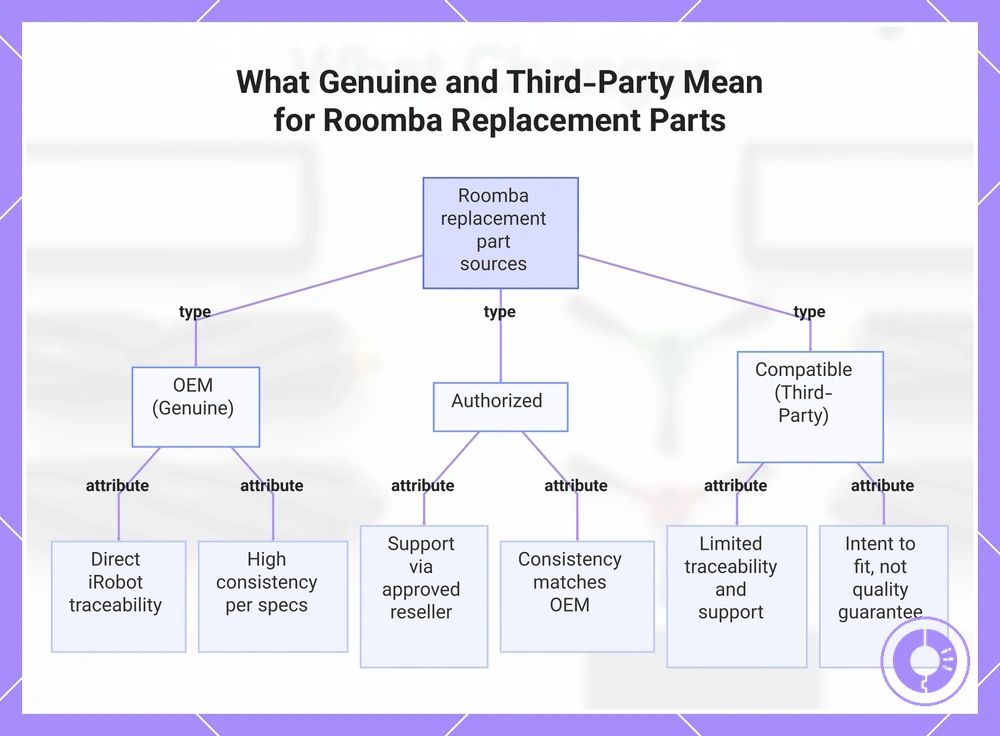
A common misconception is that 'compatible' means the same as OEM. The labels carry specific meanings for Roomba replacement parts:
- OEM (genuine): Source is iRobot; traceability and support are direct from the manufacturer; consistency is typically high because the part matches original specifications.
- Authorized: Source is an approved reseller selling genuine iRobot parts; support is routed through the reseller; consistency typically matches OEM levels.
- Compatible (third-party): Source is an aftermarket manufacturer; traceability and support are limited or absent; consistency varies by brand, so verification is required.
The 'compatible' label indicates intent to fit, not quality assurance; verification remains necessary.
For decision purposes, the source label sets an expectation range: genuine parts provide traceability to iRobot and consistent quality, while third-party parts require more verification. Which option suits a given situation depends on the specific part, model, and user's tolerance for variability.
This chart breaks down the three source labels for Roomba replacement parts—OEM, Authorized, and Compatible—and their key attributes.
The comparison criteria that matter most: fit, cleaning results, reliability, and support
When evaluating replacement parts, the criteria that matter most are fit, cleaning results, reliability, and support/warranty terms—whether from genuine or third-party sources.
The criteria—fit, cleaning results, reliability, and support—correspond to common part categories: filters, brushes/rollers, and battery.
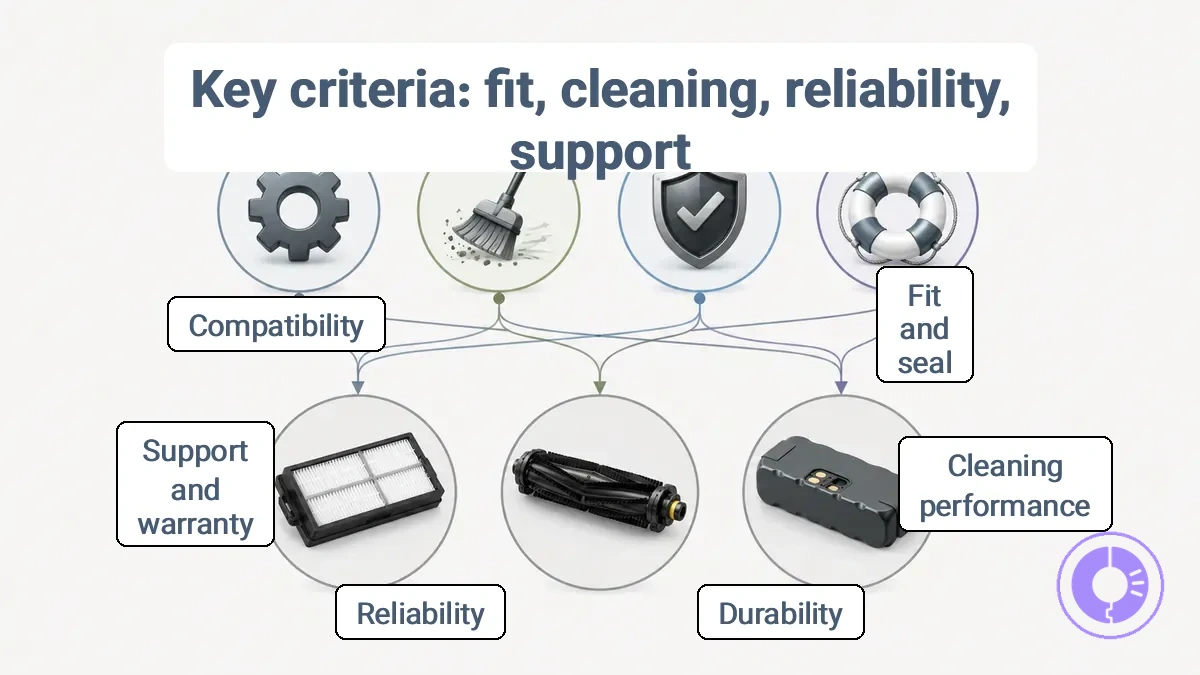
The comparison criteria that matter most work well as a repeatable checklist. Use this before buying:
- Fit: The part should seat fully and seal correctly against the mounting surface; poor seating often shows up as noise or reduced airflow.
- Cleaning performance: For filters, consistent airflow affects pickup on carpet and hard floors; a poor seal can cut suction noticeably.
- Durability: Brushes and rollers with weak material wear faster and need earlier replacement, increasing long-run cost and inconsistency.
- Reliability: A part that triggers error codes or fails within weeks points to quality issues; battery life also varies with cell consistency.
- Support/warranty: Return window and warranty terms matter more for higher-stakes components (battery, side brush assembly) than for low-stakes consumables like basic filters.
- Compatibility: Verified part dimensions and mounting points for your Roomba model prevent errors and poor cleaning performance.
In a pet-hair household with carpet throughout, cleaning performance and durability take priority because brushes and filters face heavier debris and need to last. For light use on hard floors, fit and reliability often matter more to avoid errors and noise. The materials used in the part—plastic composition, bristle stiffness, filter media—drive most of these outcomes and affect long-term value.
Material and build differences that affect airflow, brush contact, and wear
Many assume that any compatible replacement part works the same, but material choices and manufacturing tolerances often explain performance differences in a Roomba. Build differences—such as how tightly the filter media is packed or how the roller's end caps are seated—affect how the part interacts with the robot's airflow system and cleaning head. Performance differences come down to airflow restriction and brush contact behavior.
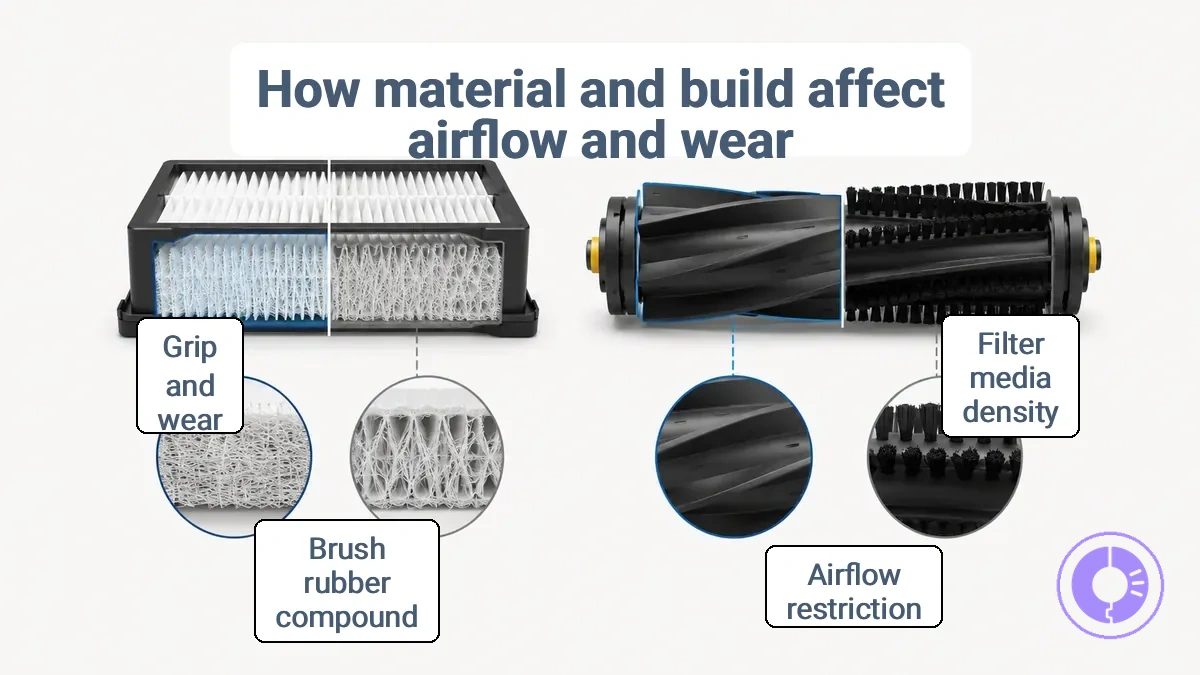
The table contrasts the main material and build variables for filters and brushes/rollers and their effects.
| Component | Effect of Material and Build Differences |
|---|---|
| Filter | Higher filter media density can reduce airflow and lower suction power, while a loose seal may let debris bypass the filter. Airflow restriction affects how much dirt the robot picks up during a pass. |
| Brush / Roller | Softer rubber compound can reduce grip on the floor and cause more tangling, while overly stiff bristles increase friction and wear on both the brush and the surface. End cap tolerance affects seating noise and overall contact pressure. |
Two common scenarios illustrate these differences. High filter media density reduces airflow and pickup, while soft roller rubber reduces grip and stiff bristles accelerate wear. Fit and compatibility depend on more than just the connector shape; the build quality of the filter media and roller compound also affects long-term wear and noise.
Compatibility and fit risk: why "compatible" parts can still misfit
Compatible parts can still misfit because compatibility depends on the specific series and revision, not just the model name. Interface details such as connector shape, clips, seating depth, and tolerance vary between revisions, so a part that fits one revision may not seat correctly in another. Checking the series and revision matters more than relying on a generic compatibility claim and helps reduce return friction.
To reduce compatibility and fit risk, use a checklist that compares the physical interface of the replacement part with your Roomba’s mounting points. A label match does not guarantee a physical interface match. Before ordering, verify the following:
- Connector shape and pin layout — a mismatch can prevent electrical contact or cause intermittent errors.
- Clip position and number — misaligned clips may prevent the part from locking into place, leading to rattling or dislodgement.
- Seating depth — if the part sits too high or too low, it can interfere with the housing seal or moving components.
- Overall dimensions — a part that is slightly wider or longer may not fit inside the chassis without forcing.
- Mounting hole alignment — offset holes can make screws impossible to insert or cause uneven pressure.
- Sensor or brush placement — a different location can block optical sensors or reduce cleaning contact.
If any of these checks fail, the part is likely a misfit. Do not force it into place; re-check the match against your Roomba’s revision number instead.
A common assumption is that a compatible label means identical performance, but a part that fits physically may still cause problems if its materials or tolerances differ. Common symptoms include noise, poor seal, errors, and rapid wear—signals that the interface is not stable even if the part appears seated. Compatibility is necessary but not sufficient for performance; source choice should be paired with quality verification.
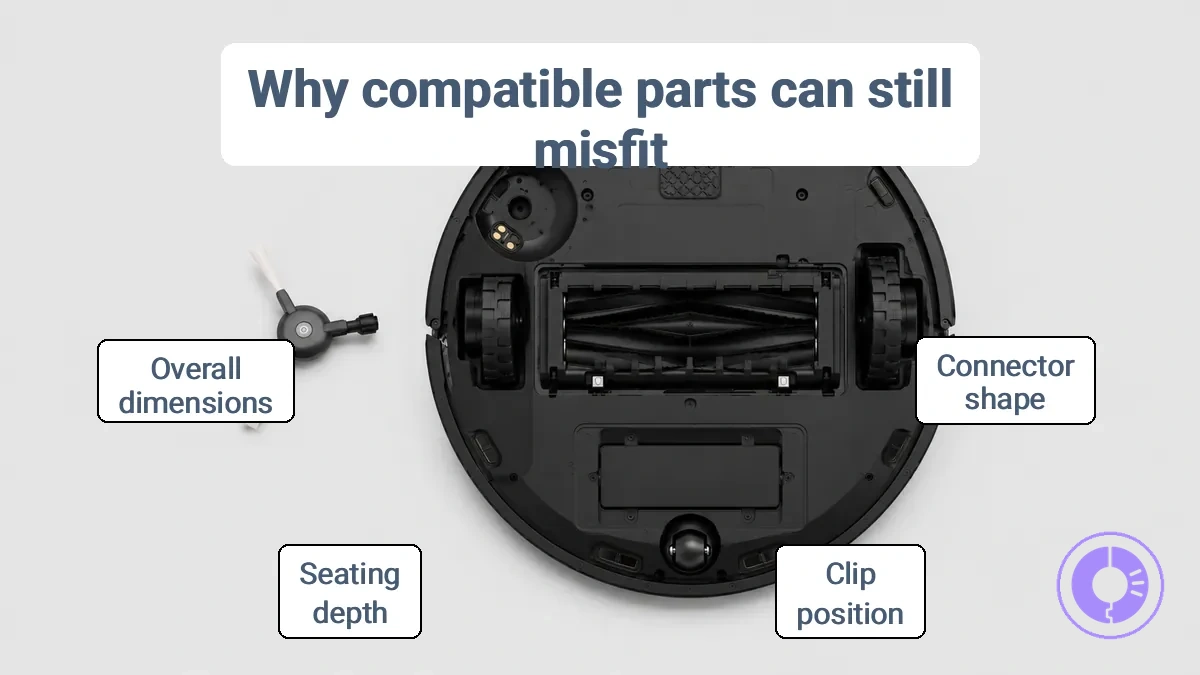
The compatibility checklist to reduce misfit risk provides a step-by-step guide for checking each interface point.
Higher-stakes parts where third-party trade-offs are bigger
Batteries and electronics-adjacent components carry higher downside when specs or quality control are off because they directly affect power delivery, runtime, and device safety. Key risks include capacity reality, protection circuitry, and contact quality. Usage conditions like heat, frequent runs, and charge cycles influence these risks. Batteries are the clearest example of a high-stakes part where third-party trade-offs are more significant.
The risk matrix organizes part categories by failure impact and warning signals. See battery safety and reliability considerations for more on battery-specific concerns.
| Part Category | Key Risk Variable | Risk Conditions | Consequences |
|---|---|---|---|
| Battery | Capacity reality, protection circuitry | Heat, frequent runs, charge cycles | Charging instability, early failure, reduced lifespan |
| Power-related electronics-adjacent | Contact quality, protection circuitry | High use, dust, vibration | Intermittent power, errors, failure risk |
Default to genuine for batteries unless verification is strong—the reliability of capacity, protection circuitry, and contact quality is harder to confirm without OEM standards. For other power parts, stricter checks such as verifying brand history and reading user reports can lower risk, but the cost-value balance shifts toward genuine when failure risk is high.
Cost vs performance: total cost over time, not just upfront price
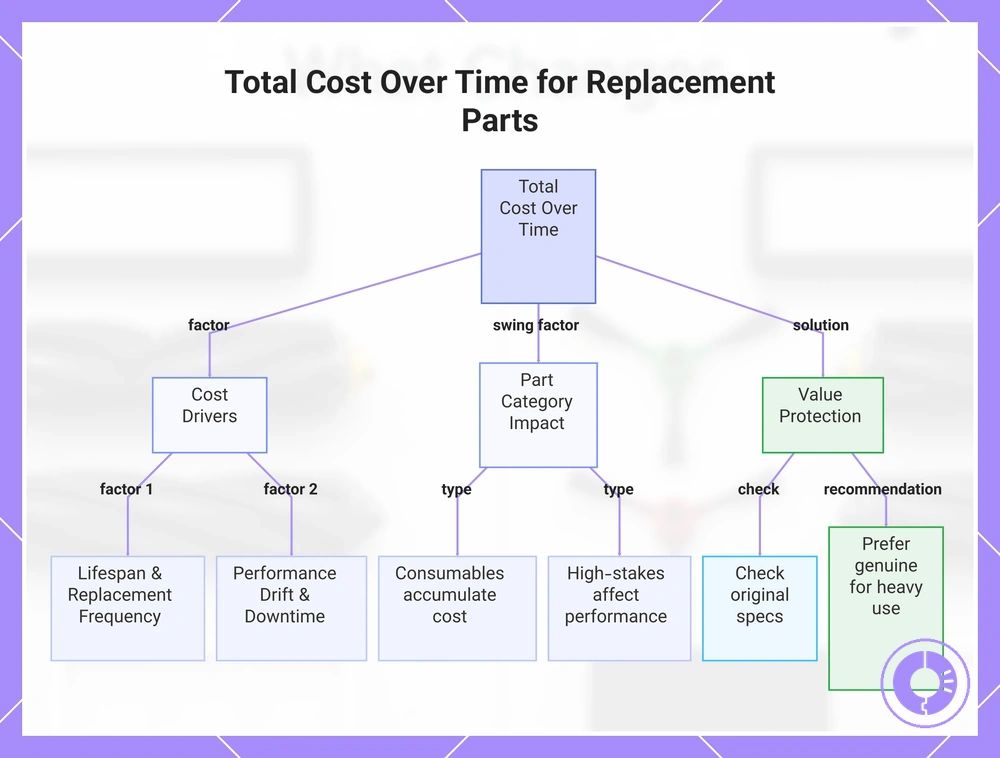
The total cost of a replacement part depends more on its lifespan, how often you must replace it, and how well it maintains cleaning performance than on the upfront price alone. A part that fails quickly or loses effectiveness after a few cycles can raise your long-run costs through repeat purchases and added downtime. The key cost drivers are lifespan and repeat replacement frequency.
The following list compares cost drivers across source choices and part types to illustrate how total cost over time differs from upfront price, without quoting specific prices.
- Lifespan and durability: Genuine parts often use materials designed to last longer, which can reduce how often you must buy replacements. A third‑party part with a shorter lifespan may seem cheaper upfront but can require more frequent swaps.
- Repeat replacement frequency: Consumables like filters and side brushes need regular changing, but third‑party filters that clog faster or brushes that wear unevenly may require even sooner replacement, raising total cost and hassle.
- Performance drift: Over time, a part that degrades can cause weaker suction, missed debris, or uneven cleaning. This performance drift can mean you get less value from each use, especially in high‑usage homes.
- Downtime and effort: Parts that fail unexpectedly or require more frequent swaps add downtime. The time spent ordering, waiting, and installing replacements is a hidden cost that increases with each repeat purchase.
- High‑stakes parts (battery, main brush): These have a bigger impact on cleaning results. A battery with poor longevity can double your long‑run battery cost, and a main brush that sheds bristles can reduce cleaning efficiency, making the trade‑offs more pronounced.
The biggest swing factor is whether the part falls into a consumable or high‑stakes category. Consumables cost less individually but accumulate over time, whereas high‑stakes parts affect performance more directly, so their reliability has outsized impact on total value.
For example, a household with heavy daily use and pet hair may see third‑party filters clog in half the time, driving up replacement frequency and downtime. In such a scenario, a longer‑lasting genuine filter might reduce total cost and maintain consistent cleaning results despite the higher upfront price. If you are considering bulk options, a kits vs individual parts value comparison can help you weigh upfront spend against long‑run savings. To protect value, verify that any replacement part meets the original specifications for fit, material, and expected lifespan before purchase.
This chart shows the main factors that determine the total cost of a replacement part over its lifetime and how to protect value.
Evaluation checkpoints before buying: reducing misfit, low-quality, and clone risk
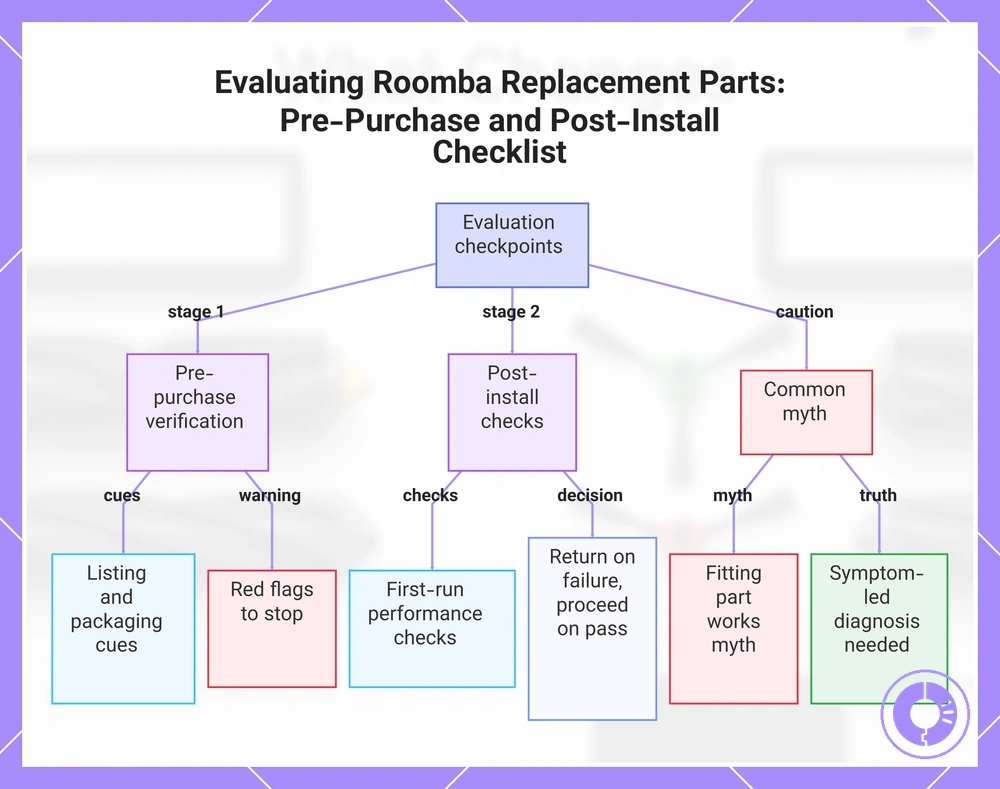
Using an evaluation checklist is the fastest way to reduce wrong orders and early failures when comparing genuine vs third-party Roomba replacement parts. A two-stage checklist separates pre-purchase verification from post-install checks. The two-stage approach helps you catch red flags early, avoiding guesswork after the part arrives.
Before you buy, focus on verification cues that reduce misfit and low-quality risk. Check the following pre-purchase checkpoints:
- Listing signals: clear model numbers and compatibility details on the product page; vague listings are a red flag for misfit risk.
- Packaging: branding, part numbers, and sealed packaging expected; missing or generic packaging suggests low-quality or clone parts.
- Seller reputation: reviews noting quality and fit checklist failures help spot recurring issues before ordering.
- Model match: verify exact model number match, not just similar shape.
- Return window: short or unclear return policy is a stop-signal; a window long enough to test fit and first-run behavior is advisable.
- Stop: material and build clues such as rough edges, mismatched colors, or flimsy packaging signal red flags to avoid purchase.
After the part is installed, first-run checks confirm whether perceived risk translates into performance problems. Use these post-install checkpoints:
- Noise: unusual grinding, scraping, or rattling during first cleaning cycle may indicate poor fit or low-quality materials.
- Error codes: robot displaying error alerts related to the replaced part (e.g., wheel drop, bin full, side brush stall) requires rechecking model match and seating.
- Cleaning performance: reduced suction or erratic movement are performance red flags; verify debris pickup.
- Fit and movement: part should not wobble, bind, or interfere with other components during operation.
- Battery drain: excessive drain after part swap may indicate mismatch or clone with higher resistance.
- Decision: stop and return within window if multiple first-run errors or persistent noise after reseating occur; proceed with normal use if checks pass.
A common myth is that any physically fitting part will work correctly. In reality, persistent issues after verified fit warrant symptom-led diagnosis, not random part swapping. When first-run checks pass but the robot behaves oddly, the problem may lie elsewhere—check the next section for troubleshooting steps based on specific symptoms.
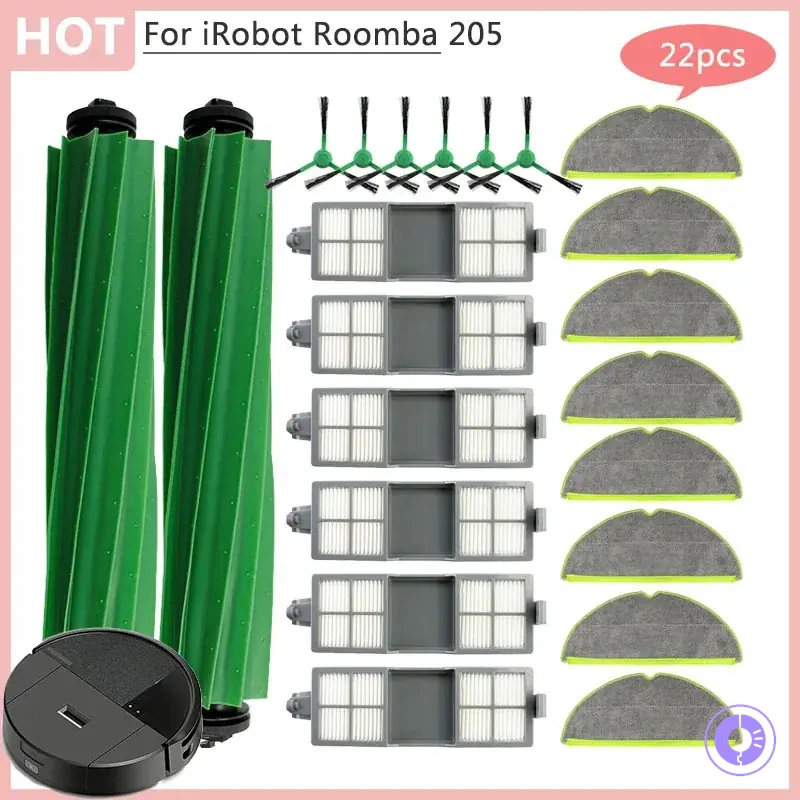
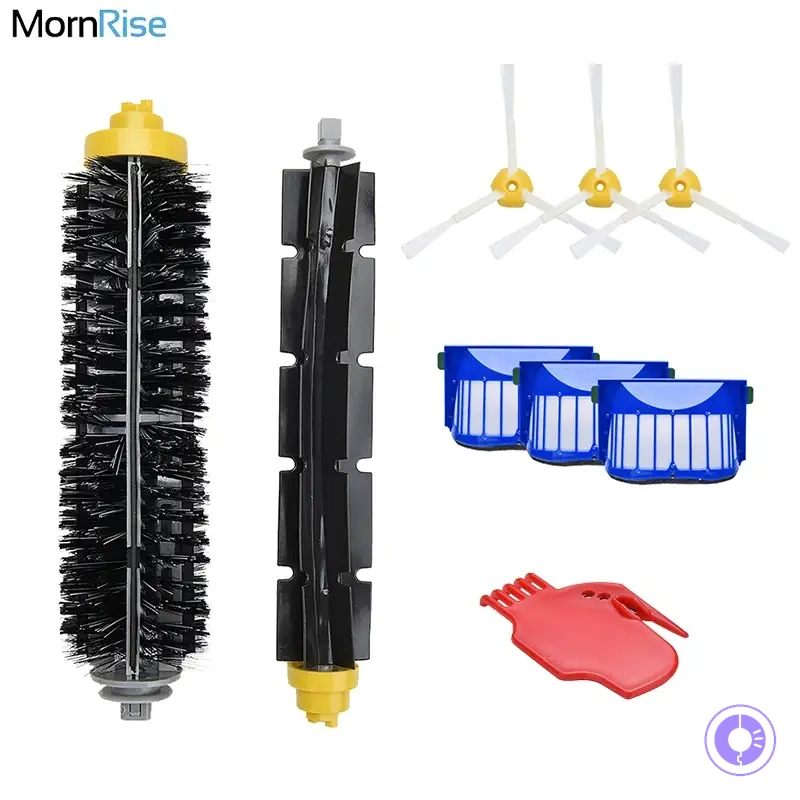
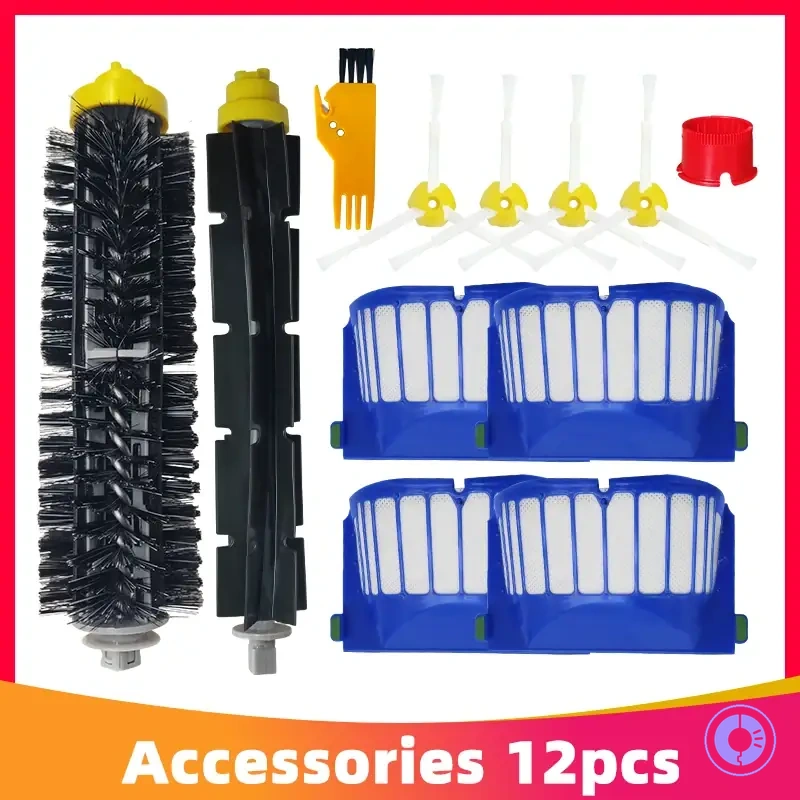
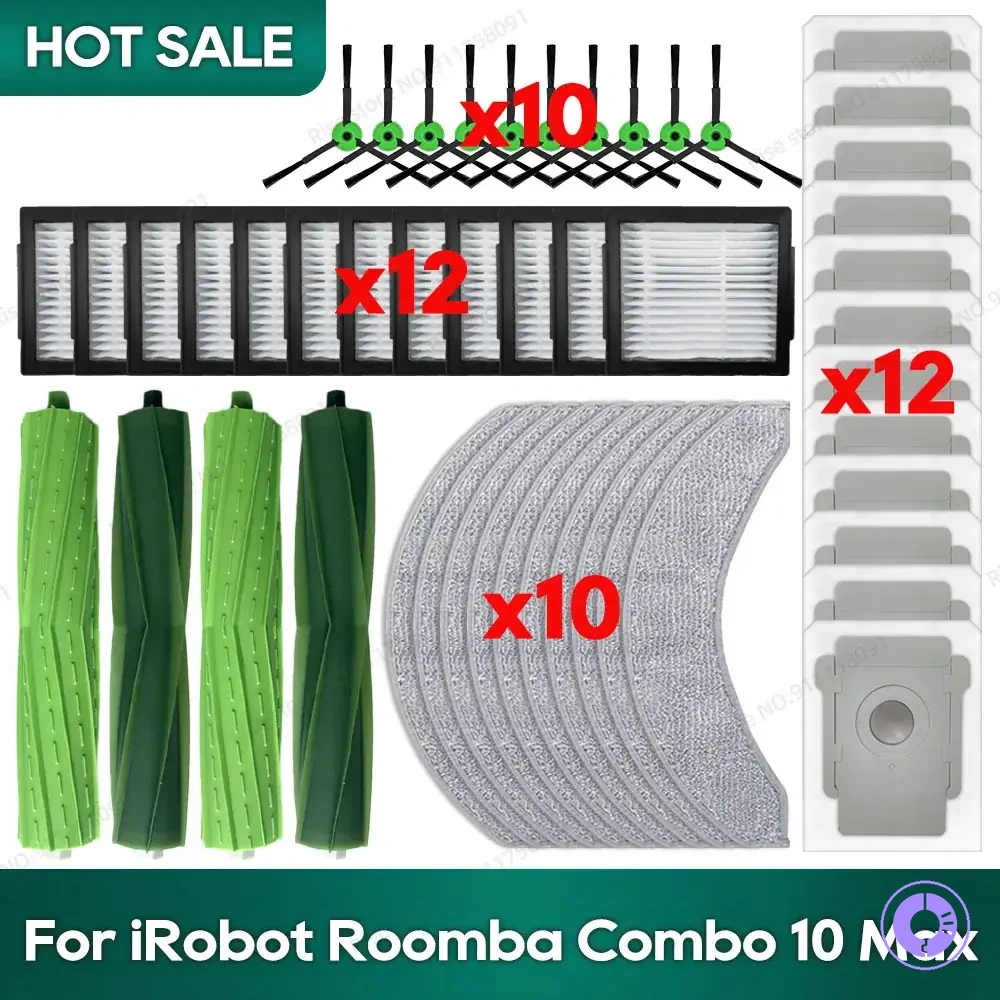
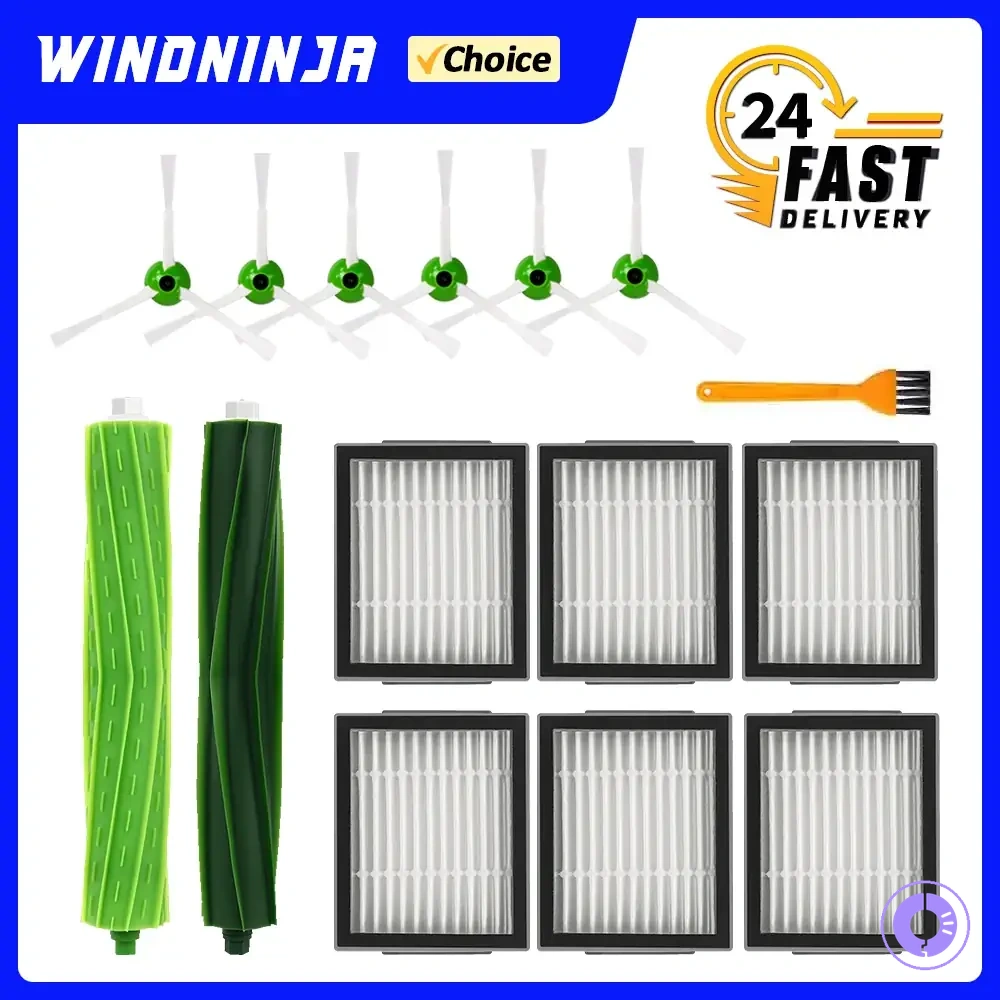
The products below are useful examples for comparing available options. Before buying, check that the compatibility criteria, key features, and product details match your needs.
This chart shows a two-stage evaluation checklist to reduce misfit, low-quality, and clone risks when buying Roomba replacement parts.
Choosing genuine vs third-party based on your Roomba, your floor type, and your risk tolerance
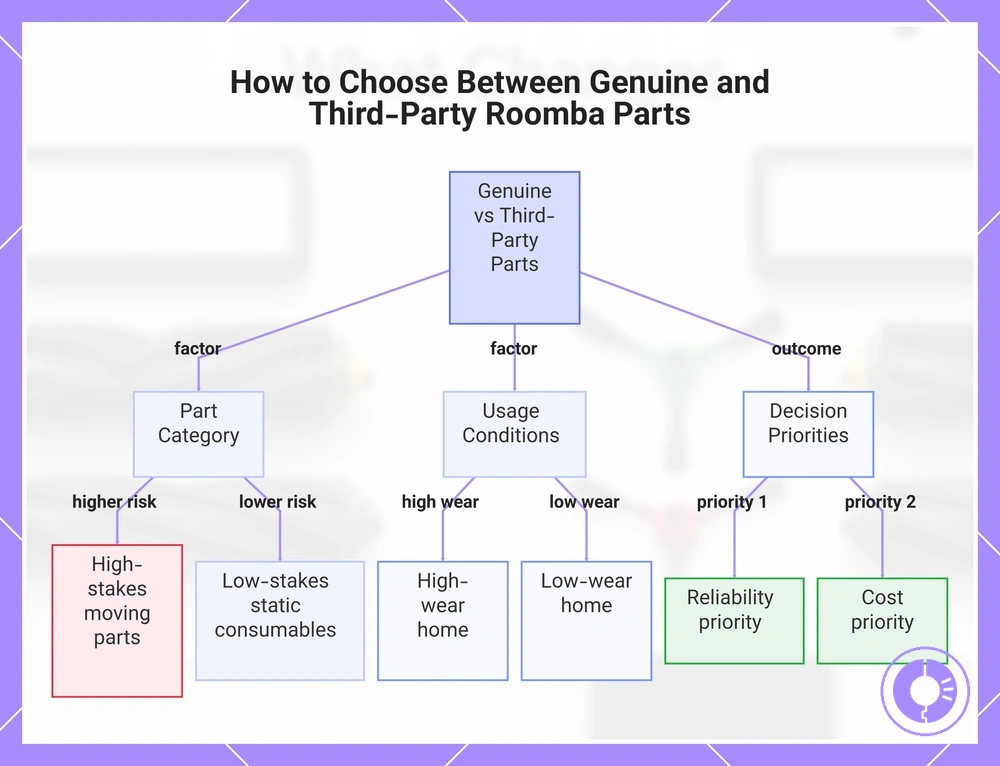
For higher-stakes items like roller brushes and batteries, genuine parts are the safer default. For low-stakes consumables like filters, third-party options can work if you verify quality through user feedback. Your purchase decision balances cost savings against wear, warranty, and performance consistency. Verification intensity—researching part quality, reviews, and fit—determines acceptable risk.
A decision tree maps your floor type, pet hair volume, run frequency, and model value to priorities and verification intensity. Part category matters: moving parts affect performance and safety more than static consumables.
- High-traffic home with pets and carpet: Priority on reliability and motor safety → genuine for rollers and brushroll → verify reseller; higher cost offsets long-term repair risk.
- Low-traffic home with hard floors: Priority on cost → third-party filters or side brushes acceptable → check user ratings; anticipate more frequent replacement.
- Older Roomba model with lower resale value: Priority on minimizing expense → third-party consumables often work fine → compare dimensions for fit; lower risk if out of warranty.
- Heavy pet hair accumulation: Priority on maintaining airflow → genuine filters maintain suction better → third-party filters may clog faster; monitor and replace often.
- Daily running schedule: Priority on consistent cleaning performance → genuine recommended for high-use reliability → third-party may wear quicker; check condition regularly.
- Hardwood or tile surfaces: Priority on gentle cleaning → either source for side brushes; genuine may have softer bristles → review third-party for scratch reports.
- Battery replacement for an older model: Priority on safety and compatibility → genuine minimizes fire risk and fit issues → verify third-party has safety certifications; third-party may be cheaper but reduce runtime.
Floor type, pet hair load, and run frequency directly affect part wear, shifting priorities between reliability and cost. Outcomes remain conditional: in high-wear settings, genuine often outperforms third-party over time despite higher initial cost.
For older Roomba units or low-stakes consumables like filters and side brushes, experimentation carries lower risk and can reveal acceptable trade-offs. If performance drops after a replacement, the guide on troubleshooting parts that restore performance can help.
The products below are useful examples for comparing available options. Before buying, check that the compatibility criteria, key features, and product details match your needs.
This chart outlines the key factors—part category and usage conditions—and the resulting decision priorities for selecting between genuine and third-party Roomba parts.